


Key Takeaways
- Eye misalignment affects how your eyes work together.
- This condition can begin in early childhood or develop later in adulthood.
- Frequent double vision or head tilting might indicate an eye alignment problem.
- Your local eye doctor can evaluate your visual coordination with simple tests.
- Therapy and specialty glasses often help improve your visual focus.
Your Eye Muscles Are Supposed to Work Together
You sit down to read a book but quickly feel a dull ache behind your eyes. Maybe you notice one eye wandering slightly when you look in the mirror. At Total Vision Camarillo, we understand that these small details often point to a disconnect in how your brain communicates with your eye muscles.
Your eyes become misaligned when the muscles controlling their movement fail to work together as a coordinated team. For instance, one eye might look straight ahead while the other turns inward, outward, upward, or downward. This creates confusing signals for your brain and doesn’t allow clear vision for your daily activities.
The Basics of Eye Misalignment
Eye misalignment, also known as strabismus, happens when your eyes don’t line up together. While one eye looks straight ahead at an object, the other eye may face a different direction. This lack of alignment forces your brain to process two different images at once. Your depth perception also suffers as a result.
When Misalignment Usually Appears
You might notice eye misalignment in children before they reach age 3. Young brains are surprisingly good at learning to ignore misalignment problems.
Adults sometimes develop alignment issues later in life. Adult-onset changes often warrant a prompt visit to your optometrist.
Sometimes newborn babies appear to have crossed eyes because of a wide nasal bridge. This is called false strabismus, and it typically fades over time as the baby grows.
Common Signs & Symptoms
Physical Signs in the Eyes
Common physical signs of strabismus or eye misalignment include:
- Your eyes visibly look crossed to other people.
- You frequently tilt your head to see objects clearly.
- You catch yourself squinting or closing one eye often.
Visual Problems
Visual discomfort often accompanies the physical signs of muscle imbalance.
- You experience frequent double vision.
- You develop noticeable headaches from daily eye strain.
- You have trouble with reading or processing three-dimensional vision.
Factors Behind Crossed Eyes
How Muscles & Nerves Interact
Your eyes rely on a complex network of muscles and nerves to function properly. Sometimes, however, the brain has trouble sending the right signals to control your eye movements. This can cause the eye muscles to become too stiff or too weak to focus properly.
Family history also plays a role. If your parents experienced alignment issues, you have a higher chance of developing similar problems.
Sudden Changes in Alignment
Life events and health changes can alter how your eyes work together. For example, uncorrected refractive errors make your eyes work harder to focus, while eye injuries can disrupt the nerve signals traveling between your eyes and your brain.
Underlying health conditions like diabetes can also impact the blood vessels and nerves supporting your vision.
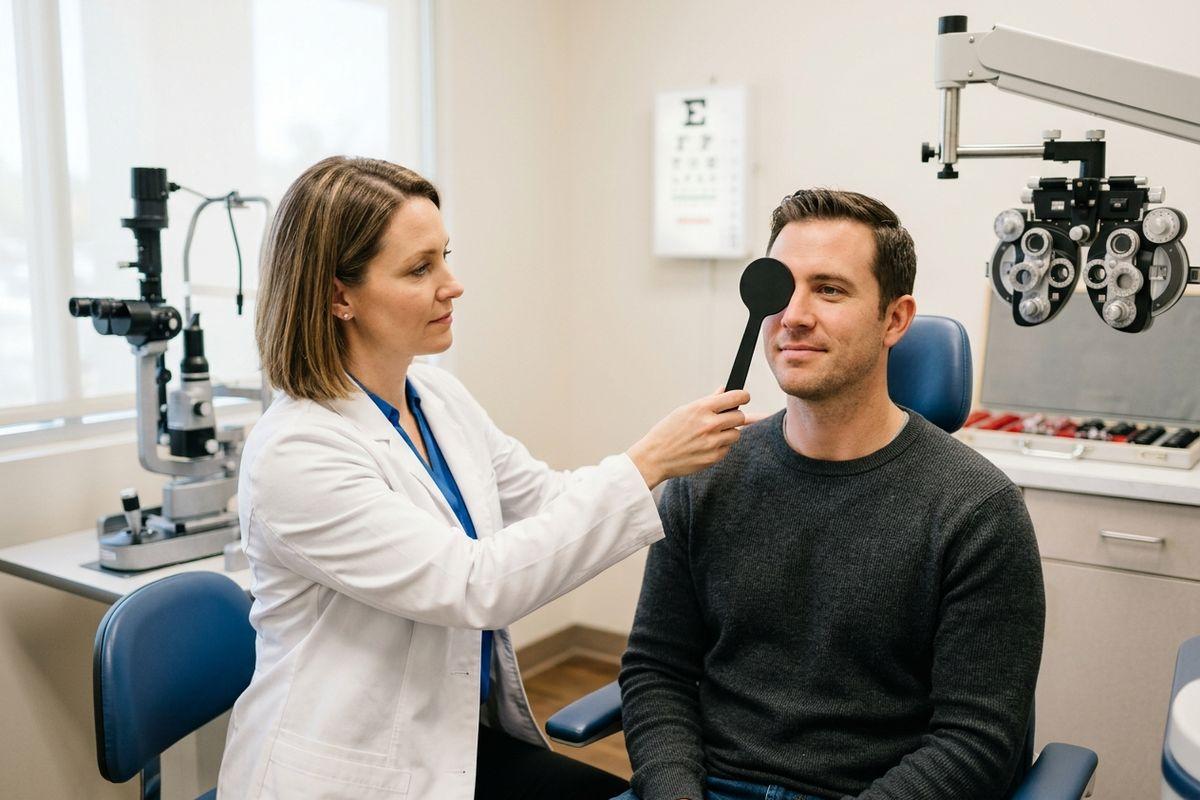
Treatment Options for Proper Alignment
Therapy & Non-Surgical Solutions
Many people find relief through conservative approaches. Your eye doctor can suggest visual exercises to help strengthen weak eye muscles naturally.
Prism glasses are another tool used to bend light before it reaches your eye. This eyewear can reduce double vision and make reading more comfortable.
In some cases, targeted injections help relax overly stiff eye muscles to improve overall balance.
Surgical Muscle Adjustments
Some situations respond better to a direct structural approach. An outpatient procedure can lengthen or reposition muscles in order to properly align your eyes.
See The World with Comfort
Addressing alignment issues early can help protect your long-term visual comfort. Our team at Total Vision Camarillo is ready to support your family with comprehensive evaluations. Schedule an appointment today to discuss your vision concerns and explore supportive options for your eyes.